Read Momentum
Momentum is the first page to read after the score, because it shows the shape of the match: the chance that one player goes on to win, recomputed after every point. It needs nothing but the score, so every match has it — a Score match as much as a Detailed one.
- 1
What the curve is
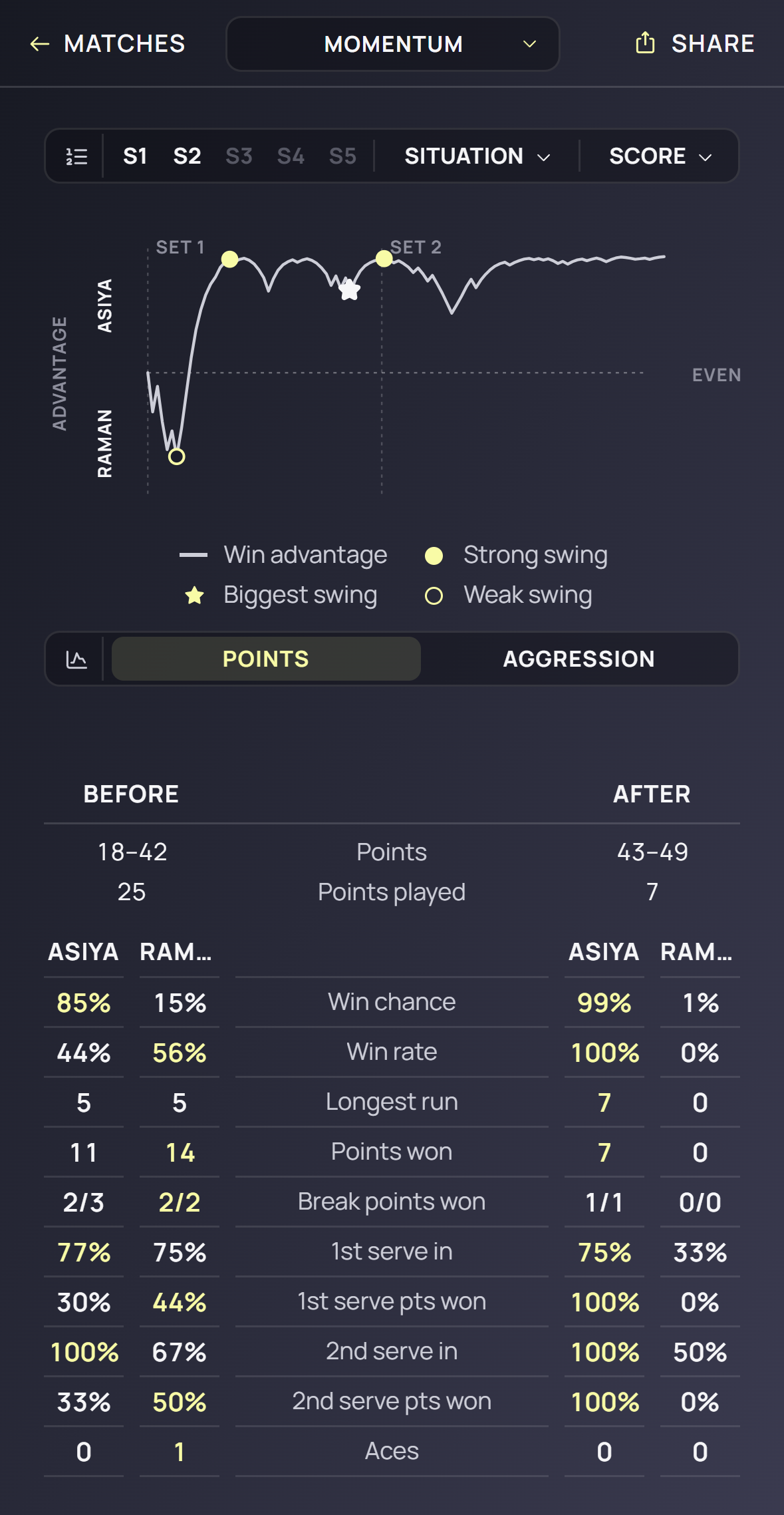
The curve is the chance that the player named at the top goes on to win, recomputed after every point from the exact score and the rules. It is not the share of points won. A point at 30–0 in the first game barely moves it; a break point at 5–5 in a deciding set can move it a third of the way. So a flat stretch is a stretch where nothing was being decided, and a steep one is the match being decided — whatever the points count says.
- 2
Find the swing
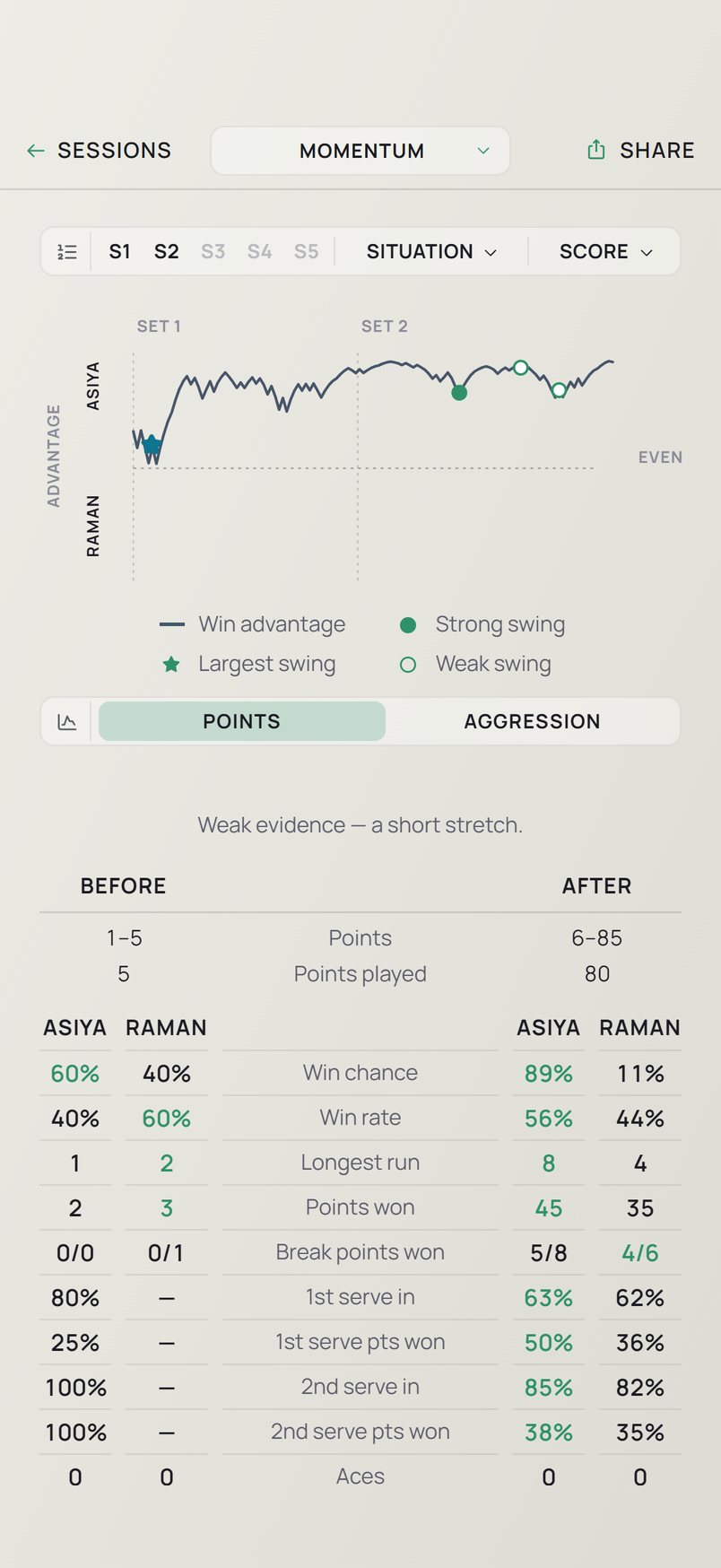
The starred swing is the largest move the curve made; discs are strong swings, rings weak ones. Tap any swing for the comparison table: the stretch before against the stretch after — points played, win chance, winners, errors, first serves in. The reading is in the gap between two rows. If the win chance moved while the share of points barely did, the big points were lost, not the rallies — go to Pressure. If both fell together, it was a stretch of poor play — put the Set filter on that set and go to Aggression.
- 3
Read the slope at the end
A curve that was still climbing when the match ended is a match that got away, or one that was closed out under pressure; either is a conversation with the player. A curve that had flattened long before the last point is a match decided early — the question is then what happened in the set that decided it, not in the last game.
- 4
Switch the currency: Points → Aggression
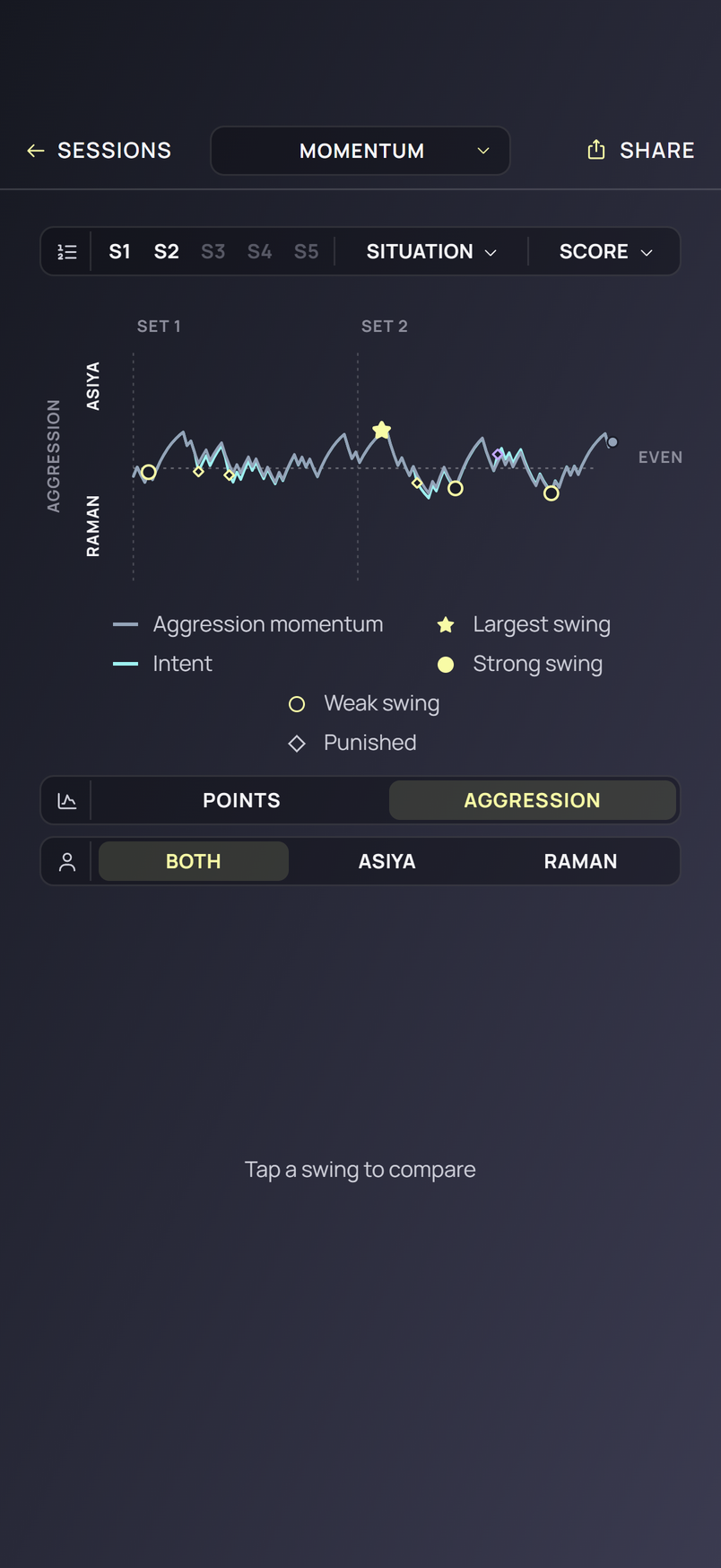
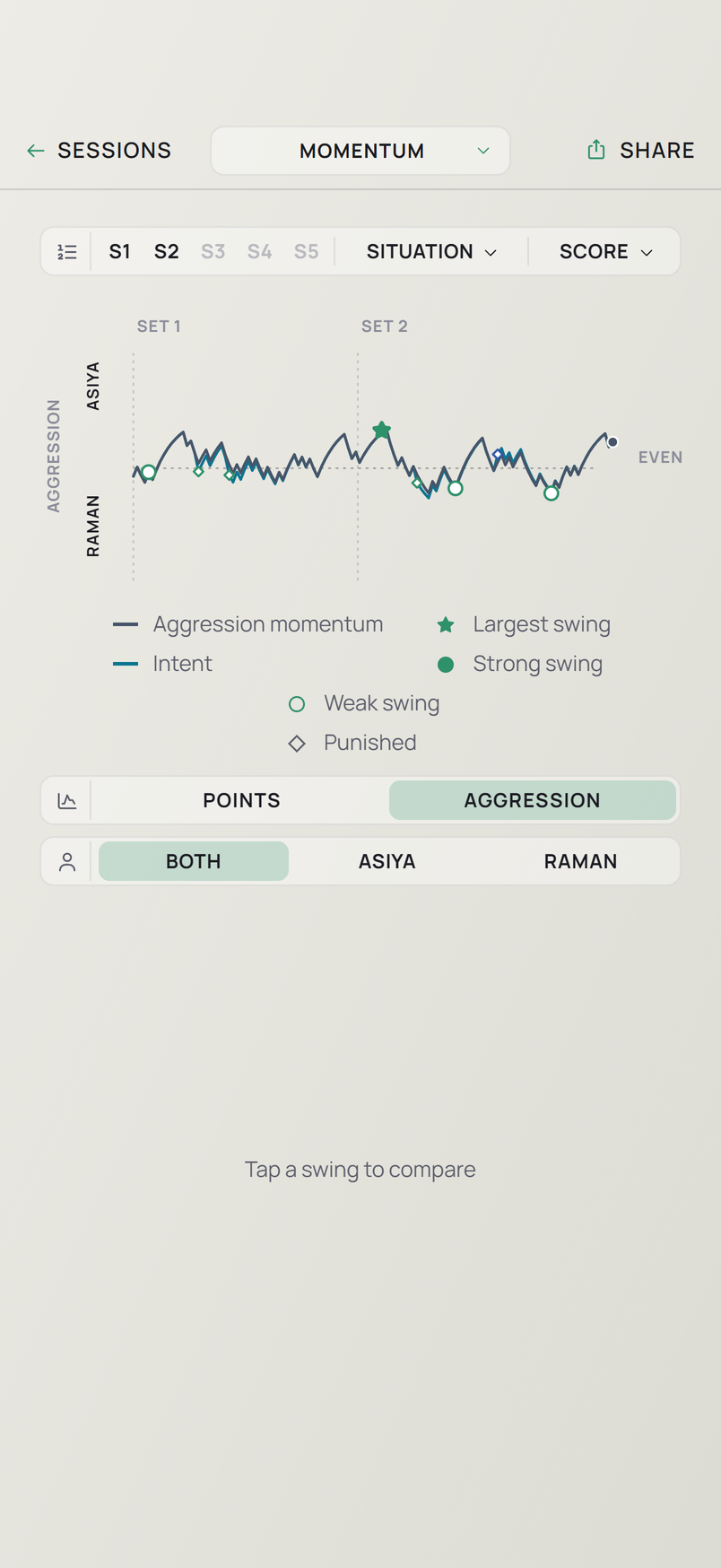
Under the legend, switch Points → Aggression to see form instead of win chance: who had been building more than giving away over the last dozen points. A lead on Points with a form line under even is a lead made of the opponent’s mistakes, and it will not last against a better opponent. The form line reads the endings, so it needs a Counter or Detailed match.
- 5
From the curve to the points
Momentum shares the filter track with the table pages; a Set filter fades the other sets rather than hiding them, so the swing can still be read against the whole match. The swing’s point range is listed on the Timeline, so the four points that turned the second set can be read one by one — and Replay jumps to the starred swing from the strip under its court.
Good to know
- Momentum needs only the score. The Aggression currency needs the endings of a Counter or Detailed match.
- On a rally session the curve is the chance of winning the block from the tally, with the rally-win rate learned from the session itself — see the Rally sessions guide.
- The practice-plan guide starts here: find the swing, then follow it to Pressure or Aggression.
Keep exploring